Setting up your workplace – how to increase your well-being
Well-being and health at the workplace – they don't come by themselves! Pain-free, healthy work requires the right office set-up . Ergonomics includes not only ergonomic office furniture but many other aspects such as lighting conditions and background noise. These factors influence your physical and mental condition. A well-thought-out ergonomic workplace design is important both in the home office and in the office in order to promote a healthy posture and avoid incorrect strain. With the following tips , you can set up your workplace ergonomically.
Ergonomic office chair
The office chair is of course part of the basic equipment of any workplace. But what features should it have so that you can work pain-free ?
- An ergonomic office chair should have adjustable armrests . These ensure that you do not tense and raise your shoulders, which reduces unpleasant neck pain . Ideally, the armrest should be at the same height as the tabletop.
- The office chair should also be height-adjustable . The optimal sitting height depends on your individual body height , but your feet should rest flat on the floor and your thighs and lower legs should form a right angle .
- A large seat offers a high level of comfort on the one hand and promotes Health on the other. Make sure that the seat reaches up to the backs of your knees when sitting.
- A good backrest with lumbar support is important to relieve the back. The backrest should be designed to match the natural S-shape of the spine and effectively support the back.
Standable stands for sustainability
Standable desks are made with FSC-certified wood and are therefore ideal for anyone who places great value on sustainability.
Ergonomic desk
The desk is the most important piece of furniture in an office – so you should pay particular attention to it. An ergonomic desk must meet several requirements so that a healthy posture is possible. Pay attention to the following features:
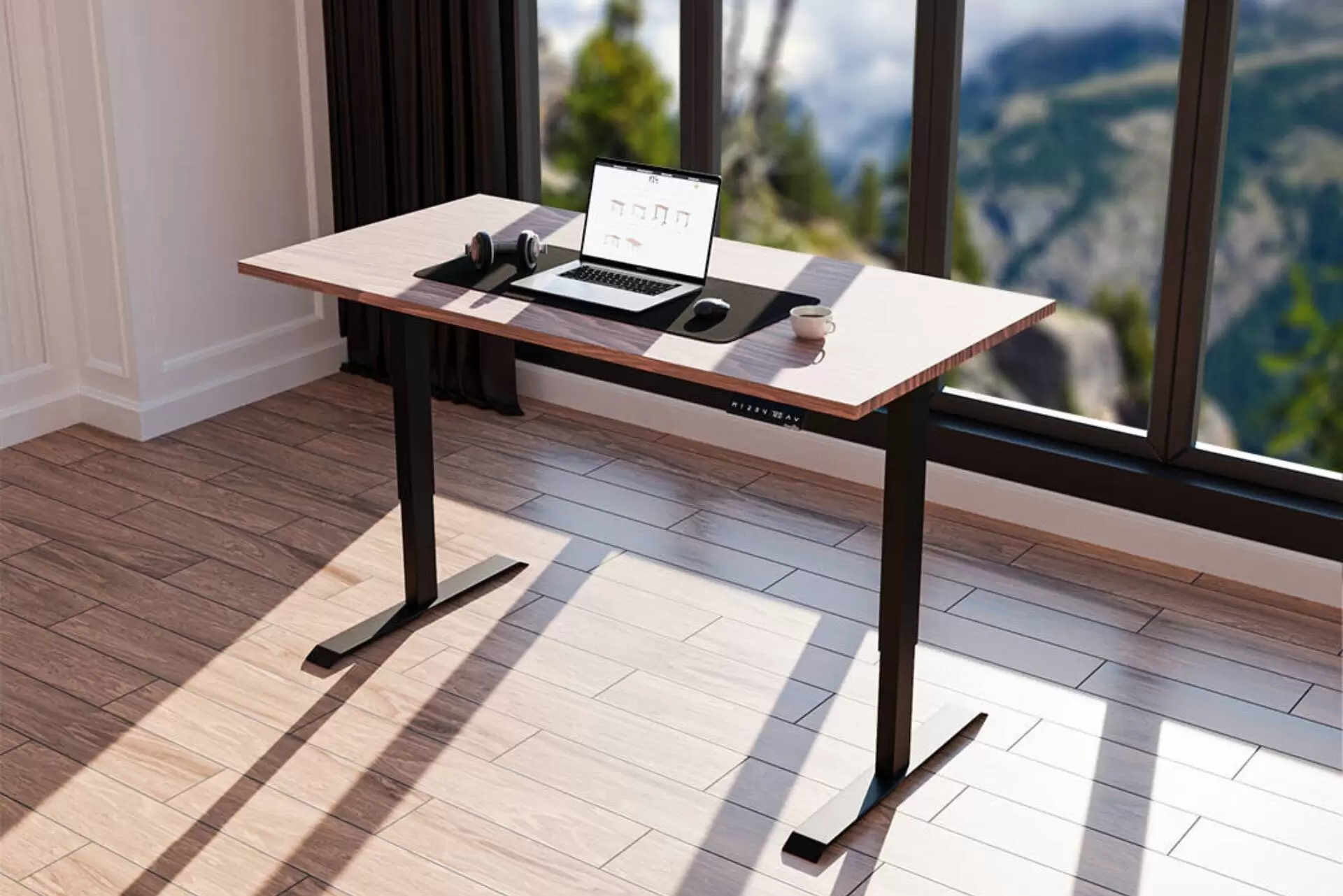
- The ergonomic desk should be height-adjustable . This allows both individual adjustment of the sitting height to your body size and working while standing . Changing posture at the desk prevents rigid sitting. Once you have set the ideal height, your forearms should be parallel to the floor and at an angle of about 90 degrees to the upper body when typing or writing. With the ergonomic desk from Standable , you can adjust the height quickly and easily.
- There are many devices and utensils on the desk – in addition to the laptop, screen, keyboard and mouse, there are other work tools too. So that your arms still have enough room, the desk should measure at least 80 cm deep and 160 cm wide .
- Desks with a pleasant feel and a stylish design not only beautify the working environment but also increase satisfaction. With the models from Standable , you get high-quality desks made of EU wood with FSC certification in a modern look.
You should also make sure that the ergonomic desk is stable and robust. Poor workmanship or inferior materials not only impair work performance but also shorten the lifespan of the desk. The best choice is therefore high-quality materials such as steel or aluminium, as they last a long time and withstand daily stresses .
Screen
For office work, the screen is the centre of attention. To reduce strain on the neck and eyes, the screen should be positioned at eye level , so that the top edge of the screen is slightly below the horizontal line of sight. The recommended distance between screen and eyes is around 50 to 70 centimetres. Screens should also be positioned so that glare and reflections from light sources are avoided .
Workspace
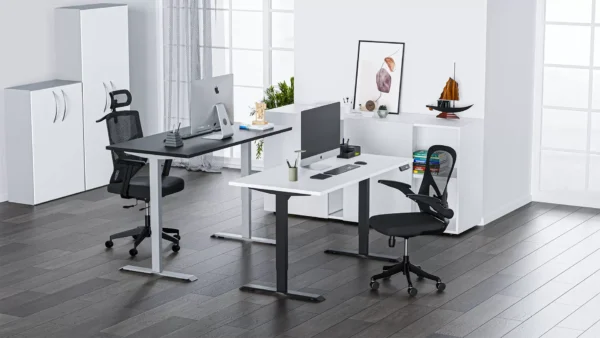
The workspace itself should be designed so that you can move around well and without restrictions . This means having enough space both for work activities and for movement breaks . Do you only have a small workspace? Here, a minimalist design is recommended, by placing either only a few or space-saving pieces of furniture in the room. Another ergonomic aspect is colour: opt for pleasant, concentration-enhancing colours such as blue or yellow.
Tip:
Aids and extras such as ergonomic keyboards, plants or noise protection further improve a pleasant environment and well-being.
Temperature
The room temperature is also part of ergonomics, as it has a major influence on our work performance and well-being. A temperature between 20 and 22 degrees Celsius is considered ideal. You should also ventilate regularly so that you always have a supply of fresh air.
Lighting conditions
Not only ergonomic furniture improves well-being, but so do the Lighting conditions. Used correctly, you can create a harmonious working environment that promotes focused work . The best is natural light, but it should not fall directly on the screen or cause glare. With artificial lighting, make sure the room is evenly lit . In general, the lighting should be bright enough to avoid eye fatigue.
Ergonomic working: the right office set-up makes the difference
With an ergonomically designed workplace , you can ensure that your health complaints are reduced and your Well-being increases. In addition to an office chair and desk, ergonomics also includes other aspects such as temperature, light and space, which should be taken into account when setting up. For pain-free and productive work, you should therefore opt for ergonomic office furnishings such as those from Standable. Would you like to set up your home office or office ergonomically? We will be happy to advise you.
Your advantages with Standable
- FSC certified EU timber
- Modern minimalist Design
- Individually configurable
- Up to 10 years Warranty
- 30 days Right of return
- Purchase on invoice available
- Free delivery