Why is ergonomics at the workplace important?
Do you often suffer from unpleasant tension in the neck and shoulder muscles or from back pain? These pains are the result of poor posture at the workplace caused by an unsuitable desk or office chair . How can such misalignments and pain be prevented? Ergonomics is a term that is becoming increasingly important. Ergonomics aims, through an optimal design of the workplace, to promote Health and Well-being . You should therefore set up your workplace so that poor posture and thus pain are avoided or reduced.
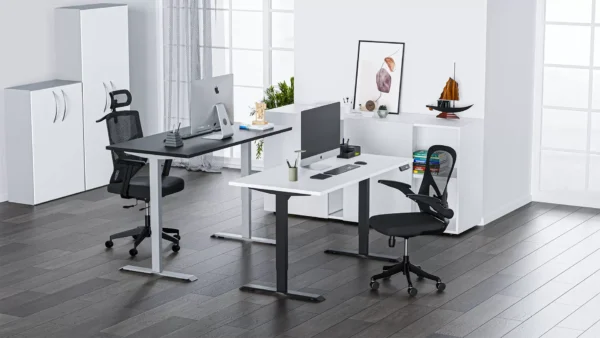
A ergonomic workplace basically consists of an office chair and a desk:
Ergonomic office chair
A well-thought-out ergonomic design of the workplace is important both in the home office and in the office in order to promote a healthy posture and avoid incorrect strain. The desk chair is part of the basic equipment of a workplace and should therefore have certain ergonomic features . To enable dynamic sitting and thus prevent rigid, one-sided strain, the desk chair should offer adjustable armrests and stepless adjustment to different body sizes. The adjustable armrests prevent you from tensing and raising your shoulders. This protects the neck area and minimises unpleasant neck pain. The ideal seat height is reached when the feet rest flat on the floor and the thighs and lower legs form a right angle.
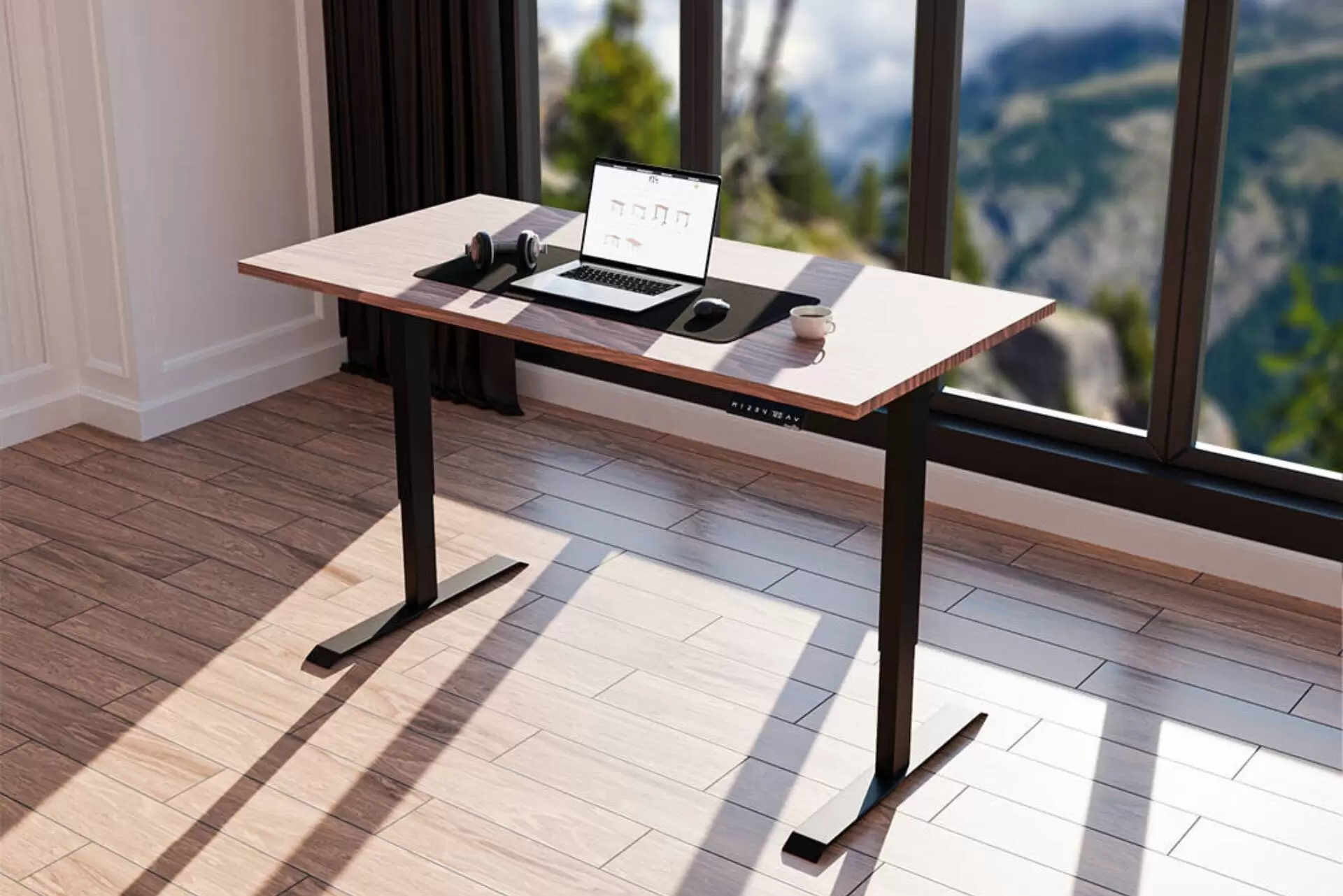
Another important aspect is an ergonomic desk. To work healthily, the desk should be height-adjustable . This allows the sitting height to be optimally adjusted to your individual body height . Ideally, the armrest of the desk chair should be at the same height as the tabletop. A sign that you are sitting optimally: your shoulders are relaxed while working and can hang loosely. With the height-adjustable desk from Standable , you can work Sitting and Standing , which enables a changing posture in everyday work and thus prevents rigid sitting.
Standable stands for sustainability
Standable desks are made with FSC-certified wood and are therefore ideal for anyone who places great value on sustainability.
Further aspects of ergonomics
In addition to adjustable chairs and desks, these areas are also part of ergonomics:
- Screen positioning: Correct positioning of the screen prevents eye strain and neck tension. A distance of approx. 50–70 cm from the screen is ideal. The screen should also be positioned so that glare from windows or lighting is minimised.
- Lighting: Good lighting is crucial for focused work. Natural light is best, but it should not fall directly on the screen or cause glare. With artificial lighting, make sure the room is evenly lit.
- Noise: If you work at a high noise level for a long period of time, you risk health problems. The workplace should therefore be designed so that you can work in a quiet, focused environment.
Ergonomics requirements for employers
Employers are legally obliged to ensure safety and health at the workplace – this also includes ergonomics. The Workplace Ordinance covers various requirements, including spatial design, lighting, indoor climate and the avoidance of lack of space and ergonomic deficiencies. Currently, however, these obligations do not apply to the home office. Which occupational safety measures must be implemented specifically depends on the type of employment. Different working models are subject to different requirements in occupational safety. In principle, the employer must determine which occupational safety measures are necessary and carry out a risk assessment . In addition to the precise assessment of the workplace, this also includes employee instruction regarding the requirements of the Industrial Safety Ordinance for work equipment.
- risk assessment: here, all factors that influence safety and health at the workplace are identified and appropriate occupational safety measures derived.
- Effectiveness check: this includes reviewing the effectiveness of the occupational safety measures. If, for example, ergonomic office furniture is missing, the employer must provide it.
The most important requirements for employers in the area of occupational health and safety:
- The workplace should be equipped with ergonomic office furniture.
- Employees must have the opportunity to change position regularly.
- The employer must ensure regular rest breaks.
- Lighting at the workplace should be adjusted to suit the respective tasks, be comfortable for employees' eyes and prevent glare or reflections on the screen.
Conclusion – an ergonomic environment is a must for healthy working
Whether in the home office or in the office: Ergonomics at the workplace is an important aspect of health. Appropriate measures ensure that health complaints and thus absences from work are prevented or effectively reduced. That is why you should, among other things, opt for an ergonomic desk so that you can work healthily and productively . Let us advise you and invest in the ergonomic desks from Standable.
Your advantages with Standable
- FSC certified EU timber
- Modern minimalist Design
- Individually configurable
- Up to 10 years Warranty
- 30 days Right of return
- Purchase on invoice available
- Free delivery